





Losing even a single tooth can lead not only to aesthetic discomfort but also to impaired chewing function, bite changes, and increased stress on adjacent teeth. Modern dentistry offers several ways to replace lost chewing units, with bridges and implants being the most common.
Many patients wonder: which is better — a dental bridge or an implant? There is no single answer. The choice of method depends on diagnostic results, bone tissue condition, bite characteristics, and the overall clinical picture.
Bridge or implant: comparing advantages and features
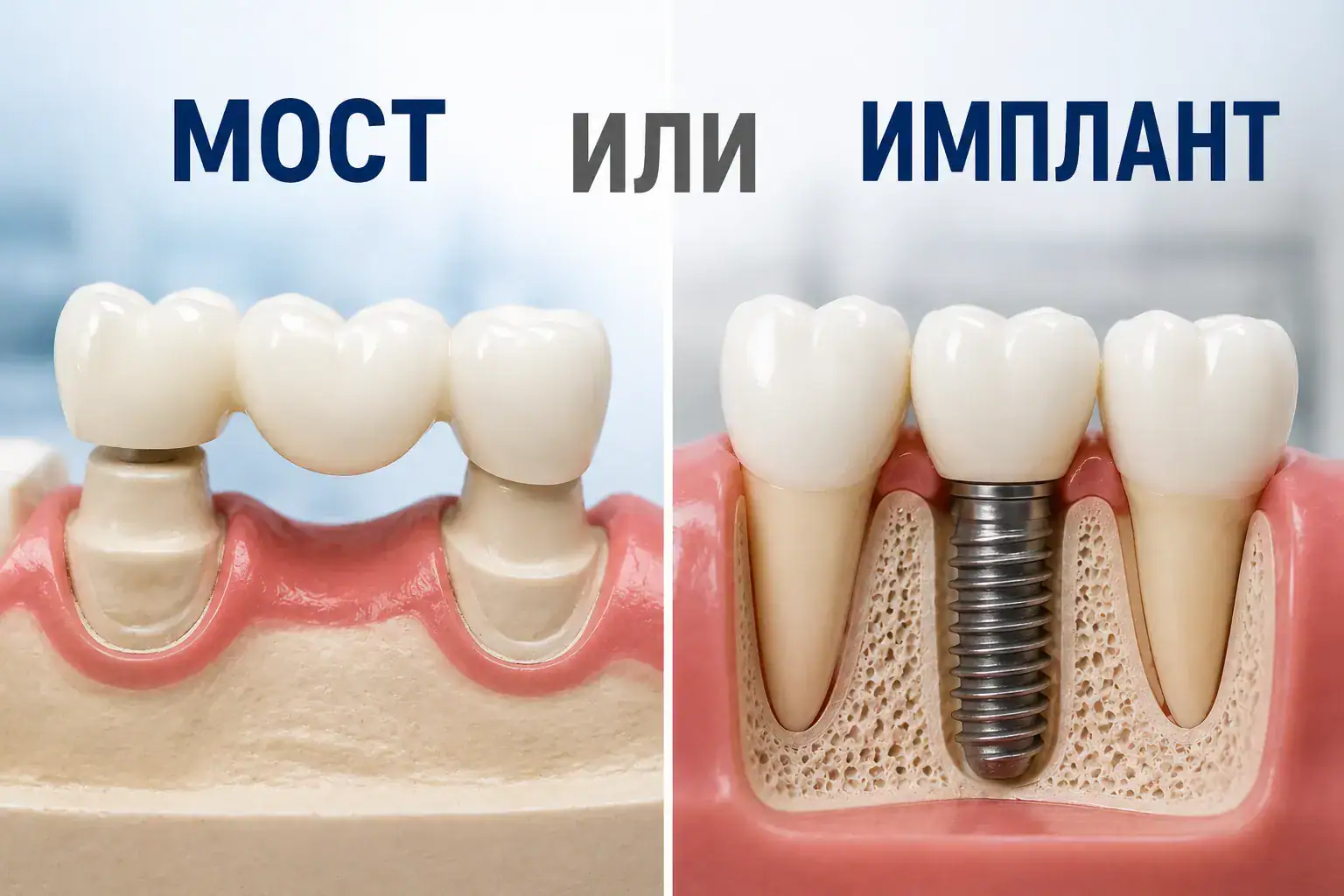
Both options help restore the dentition and return chewing comfort, but there are fundamental differences between them that should be considered when choosing between a dental bridge or an implant.
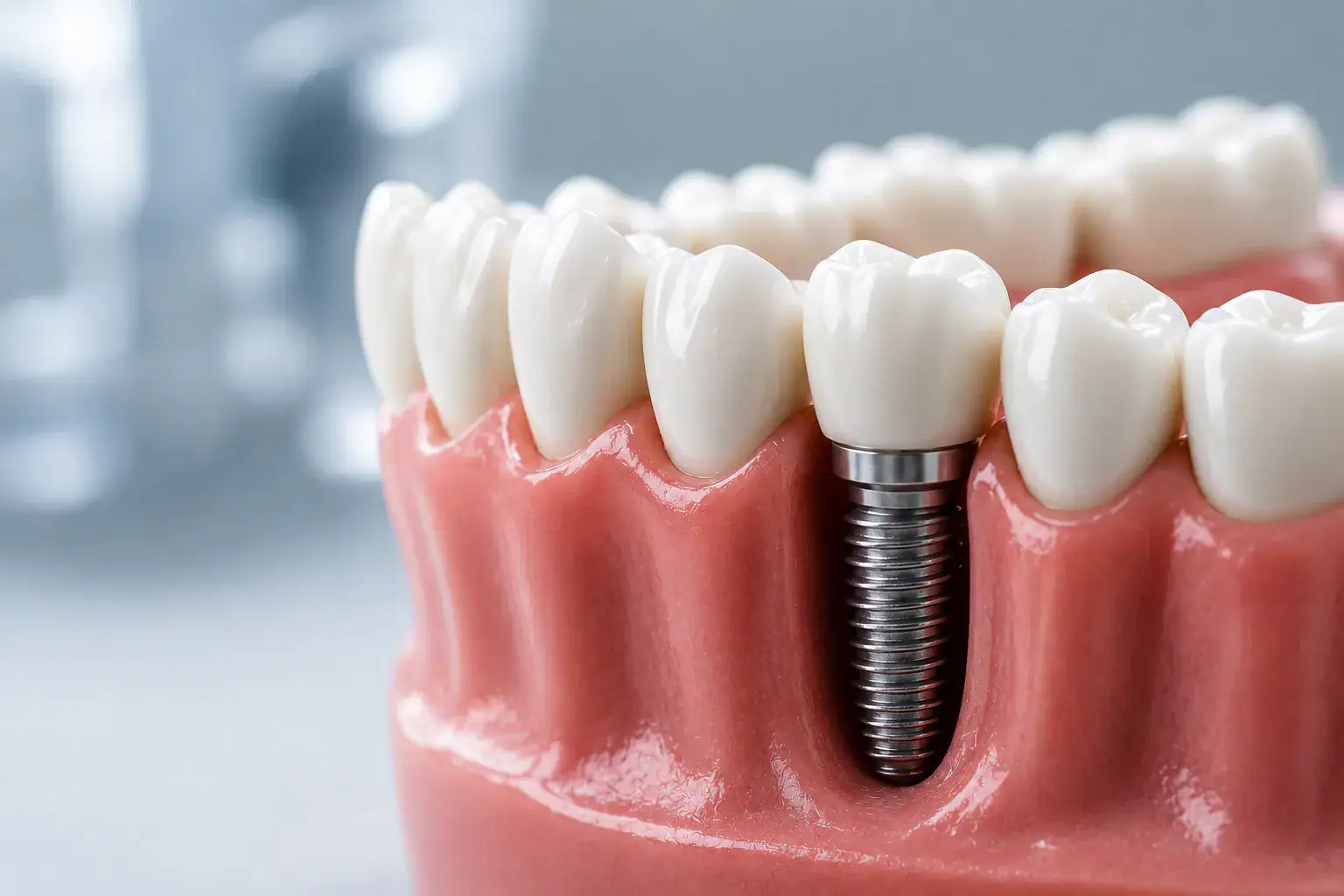
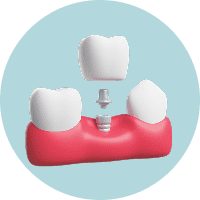
An implant is a titanium root that is placed into the bone tissue and serves as a support for the future crown. This method allows the tooth to be restored without affecting adjacent units.
A dental bridge is fixed onto adjacent elements, which are prepared in advance for the installation of the structure. This makes it possible to restore a missing unit of the row without surgical intervention.
When considering each method, it is important to understand what a dental bridge and an implant are, as well as the pros and cons of each option.
Among the advantages of implantation:
- preservation of adjacent teeth;
- even distribution of chewing load;
- prevention of bone loss;
- long service life;
- high level of aesthetics.
Often, patients without contraindications choose this exact method.
Advantages of a dental bridge:
- absence of a surgical stage;
- shorter treatment time;
- possibility of reconstruction when there are contraindications to implantation;
- more affordable cost in a number of clinical cases.
When do dentists recommend a bridge, and when — an implant?
Implantation is often considered the most physiological way to replace a missing element. This option preserves adjacent chewing units without additional preparation and helps maintain the natural load on the jaw.
If there are contraindications to surgical treatment, a lack of bone tissue, or a need to shorten treatment time, the doctor may recommend a dental bridge. In such cases, it is important to understand the difference between a bridge and an implant to choose the most suitable option for restoring the dentition for a specific case.
At the Doctor Dent clinic, each case is considered individually. Before starting treatment, comprehensive diagnostics and an assessment of the condition of the teeth, bone tissue, and bite are carried out. Based on the data obtained, the doctor compares a bridge and implantation, and then suggests the most suitable restoration option.
If you don’t know which restoration method is right for you, book a consultation at Doctor Dent. The clinic’s specialists will explain the possibilities of each method in detail and help you make an informed decision.