


Temporomandibular Joint (TMJ) Pain

Why does joint pain occur?
TMJ pain can be caused by arthritis, osteoarthritis, joint disk displacement, or bruxism. These symptoms do not resolve on their own, so it is important to identify the cause and start treatment as early as possible.
If the joint hurts, clicks, or pops, you should consult a gnathologist. The Doctor Dent clinic in Astana employs experienced specialists who conduct examinations using modern diagnostic equipment, provide an accurate diagnosis, and prescribe effective treatment.
Teamwork
Comprehensive therapy involving gnathologists, orthodontists, and surgeons
Modern Diagnostics
Accurate diagnostics without unnecessary procedures
Anti-Stress Approach
Patient comfort at all stages of treatment
Take a 1-Minute Test
If you have discovered signs of pain or discomfort in the TMJ, book a consultation with our gnathologist.
Patients come to us with issues such as:
- tooth wear
- clicking and popping in the joint
- pain when opening the mouth
- bruxism
- headaches or ringing in the ears
Our specialists perform a full examination and select an individual treatment plan.


What does a gnathologist do?
A gnathologist studies the relationship between teeth, bones, joints, muscles, and ligaments. Their primary specialization is pathologies of the temporomandibular joint and the chewing muscles. A gnathologist works in a team with an orthodontist to diagnose and treat bite disorders.
At the Doctor Dent clinic, you can undergo a full examination by various specialists.
TMJ Functions
The TMJ connects the lower jaw to the base of the skull, allowing the jaw to move up and down, forward and backward, and side to side. It is active during chewing, swallowing, yawning, and speaking. Pathology of any joint element—bones, cartilage, ligaments, or the joint disk—is called TMJ dysfunction and requires treatment.
Causes of TMJ Pain
Pain can be related to both physiological and psychological factors:
- bad habits (nail-biting, opening packages with teeth)
- bite misalignment
- chewing on one side when teeth are missing
- bruxism
- increased load on the joint
- endocrine and metabolic disorders
- infectious diseases
- injuries, dislocations
- faulty prosthetics
- chronic stress
Symptoms of Joint Problems
Consult a doctor if you notice:
- limited jaw mobility
- “locking” of the joint
- pain or discomfort in the TMJ
- clicking and popping sounds during movement
- facial asymmetry
- facial muscle spasms
- pain in the temples
What conditions does a gnathologist treat?
Most commonly, TMJ pathologies are:
- myogenic — due to improper muscle function
- arthrogenic — due to problems within the joint itself
Key conditions:
- arthritis
- osteoarthritis
- bruxism
- excessive tooth wear
- joint block
- joint disk displacement
- collapsed bite (reduced vertical dimension)

Diagnostic Methods
After taking a medical history, the doctor may prescribe:
- digital scanning of tooth occlusion
- computed tomography (CT)
- articulator and facebow studies
- condylography — recording joint movements to identify pathologies
TMJ Pain Treatment Methods
Treatment is comprehensive, involving a gnathologist, orthodontist, general dentist, and surgeon. The primary goal is to restore the correct bite and joint function.
Possible methods:
- Splint therapy — custom mouthguards to relax muscles and stabilize the joint
- Orthodontic treatment — correcting tooth position
- Orthopedic treatment — restoring damaged teeth
- Taping — supporting the joint with elastic tapes
- Botulinum toxin therapy — injections to relax facial muscles
If conservative treatment is ineffective, surgical intervention followed by rehabilitation is indicated.
Why treatment shouldn’t be delayed?
The TMJ is one of the most active joints. Disruptions in its function interfere with chewing, swallowing, yawning, and speaking. If there is pain, clicking, limited movement, or discomfort, you should consult a gnathologist as early as possible.
Ignoring the problem leads to the progression of TMJ diseases and may cause total immobility of the lower jaw.
Blog
Expert Insights on Dental Health
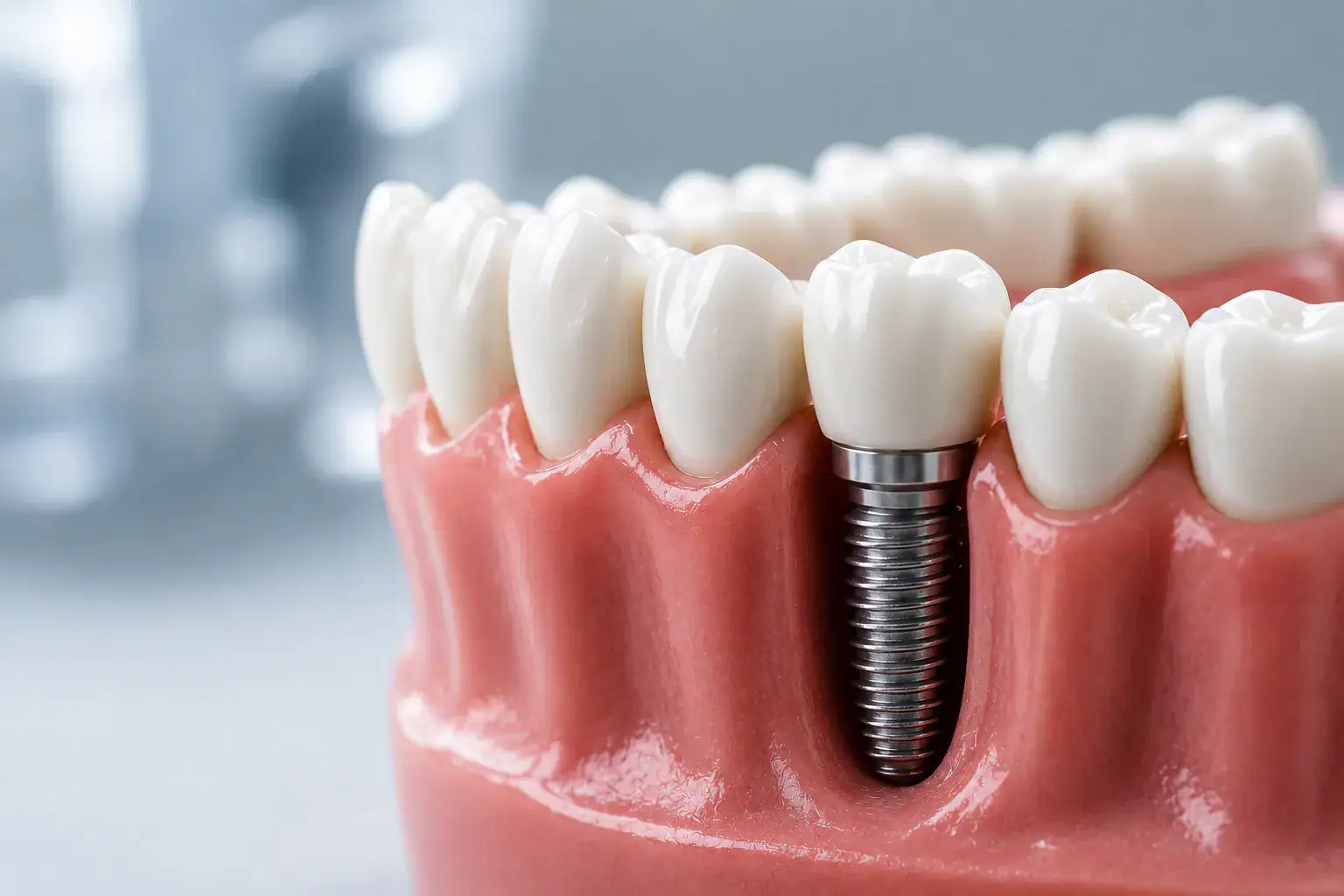
Implantation is considered one of the most reliable ways to restore lost teeth. When planning…
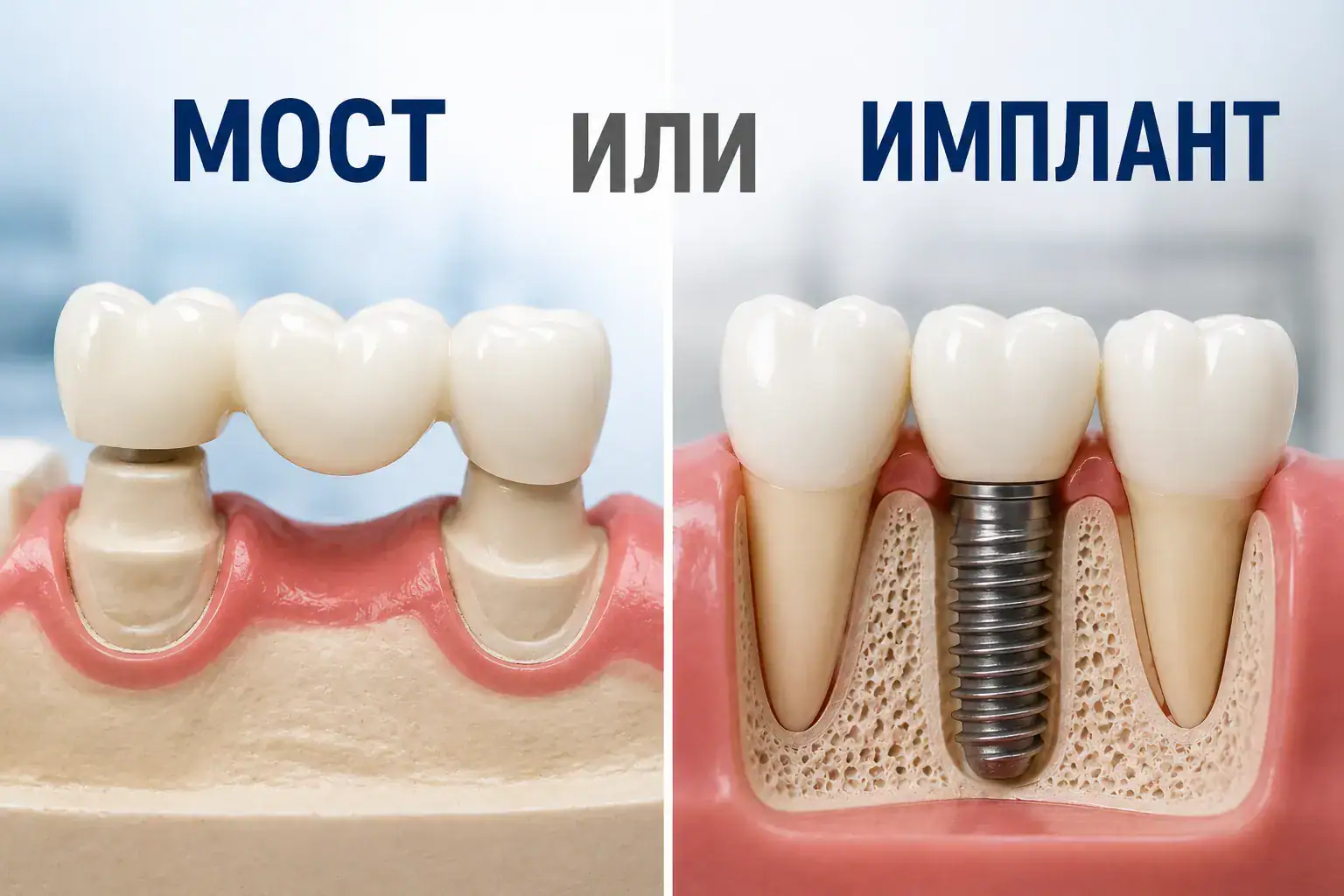
Which is better: a bridge or an implant?
Losing even a single tooth can lead not only to aesthetic discomfort but also to…

Dental Implants: Should You Be Afraid?
Dental implantation in Astana is the most sought-after procedure for restoring the integrity of the…
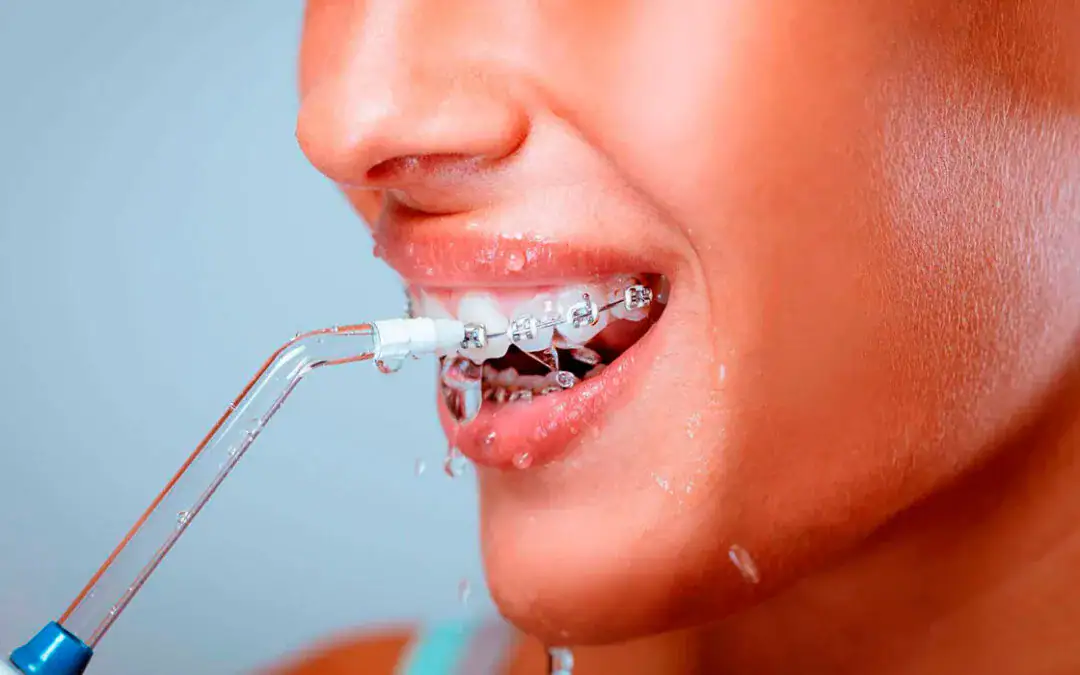
Caring for Braces After Installation
Braces help straighten the teeth, create a beautiful smile, and correct bite defects. These appliances…


