


If a tooth “shoots” with pain from a sip of cold water or hot tea, it’s not just a random whim of the body. Such a reaction almost always indicates a problem developing inside or around the tooth. And the sharper and more intense the pain from hot and cold, the higher the chance that nerve inflammation is already progressing.

The good news: in most cases, this can be treated quickly and without serious consequences if you seek help in time.
Why Teeth React to Hot and Cold
Tooth sensitivity to temperature occurs when the dentin and pulp are no longer well-protected.
This can happen for several reasons:
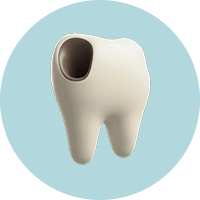
- Early-stage caries: micro-pores appear in the enamel, through which cold and heat reach sensitive structures faster.
- Enamel thinning due to overly aggressive hygiene, bruxism, and trauma: when the hard outer layer becomes thin, the nerve reacts more intensely.
- Enamel cracks: microscopic cracks invisible to the eye allow temperature to pass directly to the dentin.
- Pulp inflammation (pulpitis): sensitivity becomes sharp and “shooting,” especially to heat.
- A failing or old filling: a gap forms where bacteria accumulate. Similar situations occur when a filling breaks down.
In all these situations, the tooth is literally left “without armor,” and the nerve begins to react even to common stimuli.
Sharp Pain from Cold and Heat: What Is Happening to the Tooth
When sensitivity becomes sharp, “shooting,” or persists long after temperature exposure, it is already a warning sign.
Most often, a tooth reacts to cold and heat in several specific cases, each having its own symptoms, characteristics, and treatment methods:
- Hyperesthesia — increased enamel sensitivity: a relatively mild stage. The enamel is thinned or damaged, and the dentin is exposed, but the nerve is not yet inflamed. The pain is brief and subsides immediately after the stimulus stops. Solution: remineralization, strengthening gels and pastes, and adjusting brushing technique.
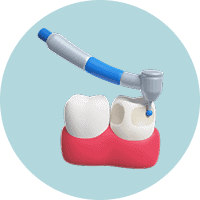
- Mid-level or deep caries: cold begins to cause noticeable discomfort, and heat sometimes intensifies it. Cavities may be invisible from the outside. Solution: caries treatment and filling.
- Pulpitis — nerve inflammation: pain occurs from cold and especially from heat; it becomes sharp, throbbing, may intensify at night, and persists even after the stimulus is removed. Solution: root canal treatment.
- Crack: sharp pain, “like an electric shock,” most often from cold or when biting down. Cracks can be microscopic but very painful. Solution: reinforcement with a dental restoration, sometimes a crown; in severe cases, root canal treatment may be required.
If a reaction to hot or cold appears, it is not normal and not just “natural sensitivity.” In 90% of cases, a problem is already developing: from slight thinning of the shell to pulpitis.
The earlier a patient seeks help, the easier and faster it is to restore the tooth without pain, complex treatment, or loss of its vitality. And if the sensations are already sharp, it’s best not to wait for the next cup of tea. The dental nerve is signaling that it needs help right now.